

A caregiver’s honest perspective, ADHD challenges & disabled travel

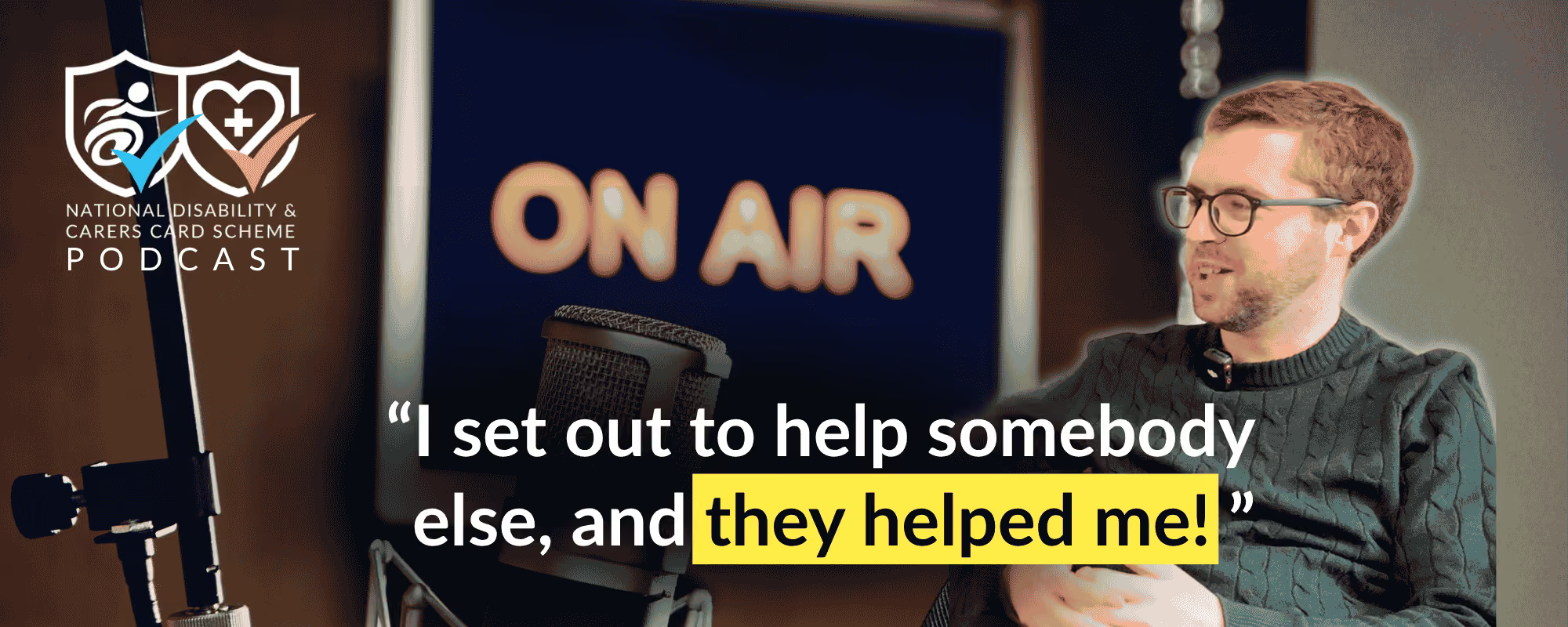
In this podcast episode we catch up with Dominic, a former professional carer. For some, caring is a planned-for profession, whereas for others, it’s something they step into unexpectedly. But at its core, it’s about connection, trust, and understanding. Dom’s journey into caring didn’t start with a plan, it started with a single opportunity, and a relationship that would go on to shape how he sees the world.
When did you first think about becoming a carer?
I’d just finished school, and I hadn’t thought about becoming a carer at all. A friend of a friend told me there was someone local who needed support, and my first thought was, “It’s not for me.” I saw it as a huge responsibility and couldn’t imagine doing it every day.
But I went for a trial day to support one lady, and we just clicked. It started to feel less like a job and more like spending time with a friend. Over the years she became a very good friend, and I’m so grateful I had that opportunity. I was helping her do things she couldn’t do alone, and her family appreciated my role, but I also got so much from it, too.
People often say caring feels like a job and not a job at the same time. Does that resonate?
Absolutely. Even for unpaid carers, I think there’s a similar feeling. You’re helping someone you care about, your mum, your sibling, a partner. It can be rewarding in a really human way. Sometimes, it even means you spend more meaningful time with someone than you would have, because caring creates that closeness.
What worried you most at the beginning?
Personal care. I was an 18-year-old boy, and I was suddenly considering a role where every aspect of personal care might be involved. I thought, “I can’t see myself doing that.” But you get over it quickly when you realise everyone needs personal care at some point. It’s not something to be embarrassed about or scared of, it’s just life. And if someone can’t do those things for themselves, it becomes a necessity. You learn to embrace it as part of caring, because otherwise it can make everyone feel uncomfortable, and it really shouldn’t.
What kinds of things did you help her do day to day, beyond personal care?
We had some amazing days out. The lady I cared for loved travel and different cultures, and we occasionally even went abroad. Day to day it might be something as simple as deciding to go to the beach for fish and chips, things people do without thinking.
I always saw myself as the “arms and legs” she didn’t have anymore. If she had an idea, even if it sounded a bit crazy, I tried to go with it, because if I were in her position and the only way I could do something was with help, I’d feel frustrated if someone just said no. So I became a bit of a “yes man” where possible.
What was one of your most memorable trips?
We once decided to book a flight to Italy. It sounds spontaneous, but the logistics were hard. International travel is often challenging for disabled people. Still, we found a way. Over time we built such an understanding that verbal communication wasn’t always necessary. It felt like being with a best friend, you start predicting what’s needed and what they like.
And this was years before the National Disability Card existed. Looking back, the airports were generally helpful, but I can see now how having a visual, recognised card can make that whole experience smoother and less stressful.
You mentioned caring changed how you see the world. How so?
It gave me perspective. It made me appreciate basic things many people take for granted. For example; getting out of bed, having a shower, making breakfast, heading out for the day. When you support someone who can’t do those things independently, you realise how significant they are.
It also helped me stop making assumptions about others. If someone is walking slowly in front of you or taking a long time at a checkout, you can’t assume they’re just being slow. They might have a disability you can’t see, and they might be managing challenges every day.
Were humour and shared jokes part of coping with the harder moments?
Definitely. We had our own jokes, and humour helped us through frustrating situations. The lady I cared for couldn’t speak, so we communicated through lip reading. There were lots of times I couldn’t understand right away, but I’d always persevere, because if someone is trying to say something, it matters.
Sometimes I’d spend ages thinking it must be really important, and it would turn out to be something like, “You’ve got yoghurt on your jumper.” But that almost made it funnier. It reinforced our bond, and it helped both of us get through difficult moments.
What skills did you develop through being a carer that helped later in life?
Patience and empathy. Caring taught me to pause and think before jumping to conclusions. A lot of people have struggles, and many are invisible.
And interestingly, I have ADHD, which can make me impulsive. Caring helped me slow down, consider what might be going on in a situation, and what someone might need, rather than reacting instantly. I set out to help someone else, and in many ways, they helped me too.
You’ve mentioned having ADHD, can you share what that’s been like for you?
I was diagnosed later, as a young adult. For years I felt like something was “wrong,” but I didn’t know what. My thoughts felt tangled. In noisy places like school playgrounds, parties, loud offices, I found it hard to focus because my brain would pick up everything.
Because I wasn’t diagnosed early, I had to build my own coping mechanisms. I learned how to self-soothe and take time out when I needed it. Part of me wishes I’d known earlier, because it would have helped in childhood. But I also don’t think I’d change how it played out, because it helped me learn a lot about myself. When I was diagnosed, I felt relief. It explained everything I thought was wrong with me and made me realise there wasn’t anything wrong. My brain is just different.
How would you explain ADHD to someone who has no concept of it?
It varies from person to person, but for me, it’s like struggling to hold focus because any small trigger can send my thoughts off on a completely different track.
The best analogy I can give is a filing cabinet being knocked over—papers everywhere, all related to different things. You pick one up, then another seems more interesting, then another… and nothing ever gets filed neatly in order.
There’s also the hyperactivity side, like shaking a leg without realising, or needing to move. I’ve had to learn how to conform to expected behaviour, even when it’s uncomfortable.
If I’m telling a story and I’m interrupted, I can lose the track entirely. The more I try to remember what I was saying, the further away it gets, then unrelated thoughts start coming in. Even a small distraction can be much bigger than the person intends.
How does ADHD affect you at work?
It can vary. One thing that helps me is hyperfocus, but it’s not something I can switch on deliberately. It tends to kick in when something really interests me or when I really want to get something right.
I’m lucky that I enjoy my job, so that helps. But distractions can still derail me. For example, I once left a meeting to collect a parcel, came back, sat at my desk and two minutes later realised I was meant to still be in the meeting. A small distraction can completely reset my brain.
If someone has just been diagnosed with ADHD, what would you want them to hear?
Embrace it. Wear it with pride. It’s nothing to be ashamed of. The stigma used to be that ADHD was just the “naughty kid in class,” but there’s far more education now.
When I got diagnosed, I felt relief and pride. It helped me understand myself. So I’d tell anyone newly diagnosed: don’t hide it, don’t feel embarrassed, and don’t shy away from talking about it.
What would you say to someone considering a caring role, or suddenly finding themselves as an unpaid carer?
There’s no single “right way” to be a carer. Everyone is different. You learn what the person needs, and they learn how you can support them. It’s a learning experience for both of you.
Whether it’s a career or unpaid care, it’s an amazing role and I think it’s appreciated far more than you might realise.
You’re also a National Disability Card holder. How has the card helped you?
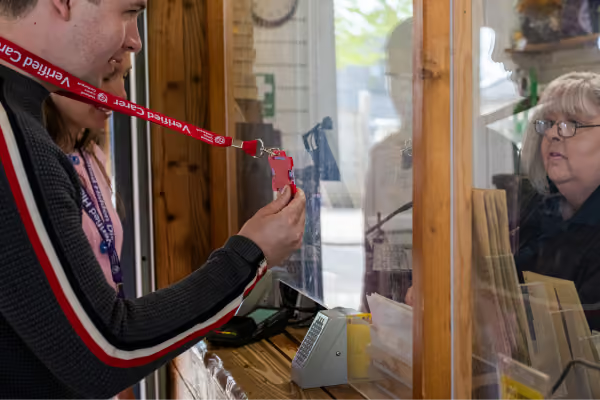
Travel is where it’s helped the most. I was diagnosed with scoliosis at 12 and I’ve lived with pain for most of my life, but it’s invisible. When you’re travelling, you don’t always want to explain your condition, and you worry people will assume you’re just trying to skip queues. Having the card as a visual aid makes things easier. Sometimes staff will notice it and point you to a shorter queue. Other times I’ll show it and explain briefly. Either way, it reduces stress, especially the anxiety of standing in long lines or not having somewhere to sit.
A recent example was a weekend in Paris. I was worried about the queues at the Eiffel Tower, but I went to their accessibility office, and the staff were incredibly helpful. I also got a discount for a companion. It made the whole experience feel possible.

|

|

|
About the National Carers Card
The National Carers Card is a form of visual identification for carers across the UK. Designed to support and acknowledge the invaluable role of carers, the card helps with accessing services, discounts, and other benefits that make daily life a little easier. Founded by carers in 2019, the National Carers Card is part of a social enterprise for good dedicated to supporting carers and their families.
Conclusion
Dominic’s story is a reminder that caring is not just about support, it’s about connection, patience, and seeing the world through a different lens. Whether through professional care, unpaid support, or simply showing a little more understanding in everyday life, small actions can make a lasting difference.
Share

.avif)

