

Learn 17 Years Of Caregiving Experience in 30 Minutes

Learn 17 Years Of Caregiving Experience in 30 Minutes
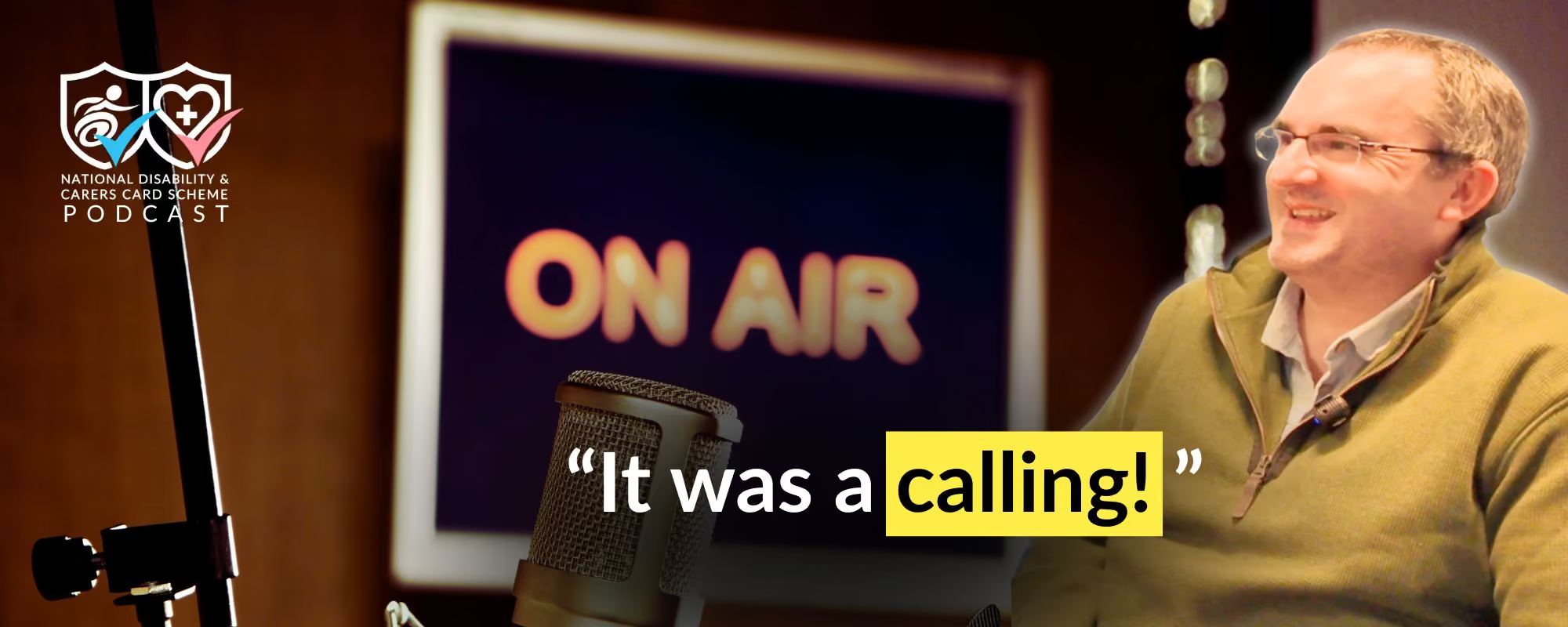
Our podcast episode with Jason Busby, a professional carer with 17 years’ experience supporting people with complex needs, is now live! He shares what drew him into care, what the job really involves day-to-day, and the moments that stayed with him most. Please note the content of the video has been abridged and paraphrased in this article for readability. Watch the full episode here:
How did you first get into professional care work?
My journey started 17 years ago. Before care, I worked for a local authority. Between jobs, a good friend asked, “Have you ever thought about care?” I hadn’t — until I met the first person I’d be caring for. That’s where it began.
What made agency care harder than private care?
Agency care can mean short visits — 15 minutes, 30 minutes, maybe an hour — and then you might not see the person again for weeks. It’s harder to build consistency and trust when you’re in and out like that. I did one year with a care agency, but it wasn’t for me. I like building a relationship, really getting to know someone — how they communicate, what they need, what helps. Private care made that possible.
What’s special about building that long-term relationship?
You get to know the client's quirks — and they get to know yours. And you can bring your own specific skills to the table. For example, one of my clients was a pianist. His stroke affected his left side, so we ended up duetting on the piano together—because I play too. Those moments weren’t just “nice” — they were meaningful and enabled him to live the life that he wanted.
What changed in the care sector over your 17 years?
Two big things changed:
- Training improved massively. When I started, there weren’t the same care modules and courses available. Now there’s loads — often online, sometimes in-house.
- Accountability and record-keeping increased. Early on, we weren’t required to take detailed notes. By the end, paperwork and records were central — especially with agency carers using apps and needing time set aside just to document everything.
It’s a positive in terms of safety and accountability, but it does make the job heavier and takes time away from the actual care.
What are some of your favourite memories?
With my final client, harvest season was everything. He came from a farming family, so we’d spend hours watching combine harvesters, especially sugar beet harvesters (they’re nicknamed “beet eaters”). You could see how happy he was being able to follow and watch them.
With another client, it was our piano duets — and taking him to London for events at the Army and Navy Club. Helping someone keep living a “normal” life, as much as possible, is one of the best parts of the job.
Do carers end up close with the person’s family too?
You become part of the furniture in a client's family. I still keep in touch with my clients' spouses, whether it's a weekly cup of tea or just Christmas and birthday cards - and I have played the organ for clients' family members' weddings, which is really special.
How do you manage boundaries when you’re part of the family but also doing a job?
Boundaries matter a lot, especially with complex care. You’re balancing medication, feeds, routines — all the essentials — while trying to give someone the best quality of life.
One of my clients had a “man cave” in an old workshop. Getting out there every day was his priority — so it became our job to make that happen, even if it was just for a couple of hours.
I learned to use a MIG welder in that workshop. (Terrifying.) There was also a massive saw bench, which I avoided — musicians need their fingers.
What’s the hardest part of the job?
Staffing and scheduling. Care isn’t a 9-to-5—it’s early starts, late finishes, weekends. Toward the end, I was managing schedules across private and agency carers, and if there were gaps, you just had to fill them. It’s demanding work, and not always high paid, but it can be deeply rewarding.

What makes it rewarding?
If you leave at night and the client is tucked up in bed, and they’ve had a good day - that means you’ve had a good day. If you arrive in the morning and they’re pleased to see you because they know it’ll be a good day—that’s the reward. The smile and the thank you at the end of the day is the reward.
Are there stereotypes about carers, especially male carers?
There aren’t many male carers, from what I’ve seen. Over the years I can only think of a handful.
But some people prefer male carers. My first client wanted only male carers — there wasn’t a single female carer in three years. Other clients liked a mix, but he also valued time with “a chap” in the man cave.
What would you say to someone considering caring as a career?
Be ready for hard work and long hours. You can’t always fit it around school runs and a typical routine.
But the rewards are there. Whether you work in a care home, someone’s home, or travel between clients. There are vacancies everywhere, and it’s a job where you can genuinely make a difference.
What helped you through the tough times?
For me, having my own support at home was key. And music. As a musician, I always had an outlet, somewhere to put frustration. We also relied on support networks: a local community matron, the MS Society, and hospice services. Having someone at the end of the phone, especially when GPs are stretched, matters more than people realise.
Any unexpected or funny stories from the job?
One client once ended up in a ditch in his mobility scooter and I needed to call the fire brigade to help him get out!
And then there was Bruno: a huge monitor lizard we found in a field. It belonged to a neighbour, who had a number of them, but it had escaped. The RSPCA rescue made the papers.

|

|

|
About the National Carers Card
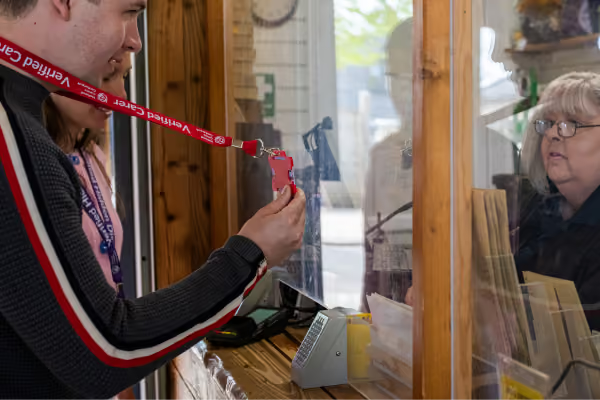
The National Carers Card is a form of visual identification for carers across the UK. Designed to support and acknowledge the invaluable role of carers, the card helps with accessing services, discounts, and other benefits that make daily life a little easier. Founded by carers in 2019, the National Carers Card is part of a social enterprise for good dedicated to supporting carers and their families.
Conclusion
Jason’s story is a powerful reminder that caring is as much about human connection as it is about practical support. Across 17 years, he experienced the challenges, responsibilities, and long hours that come with the role—but also the deep rewards of helping someone live well, on their own terms. From quiet moments of companionship to occasions of loss, his reflections show that professional caring can be demanding, unpredictable, and profoundly meaningful, offering a sense of purpose that stays with you long after the day’s work is done. For more support in your own caring journey, consider the National Carers Card and other resources on this blog.
Share

.avif)

